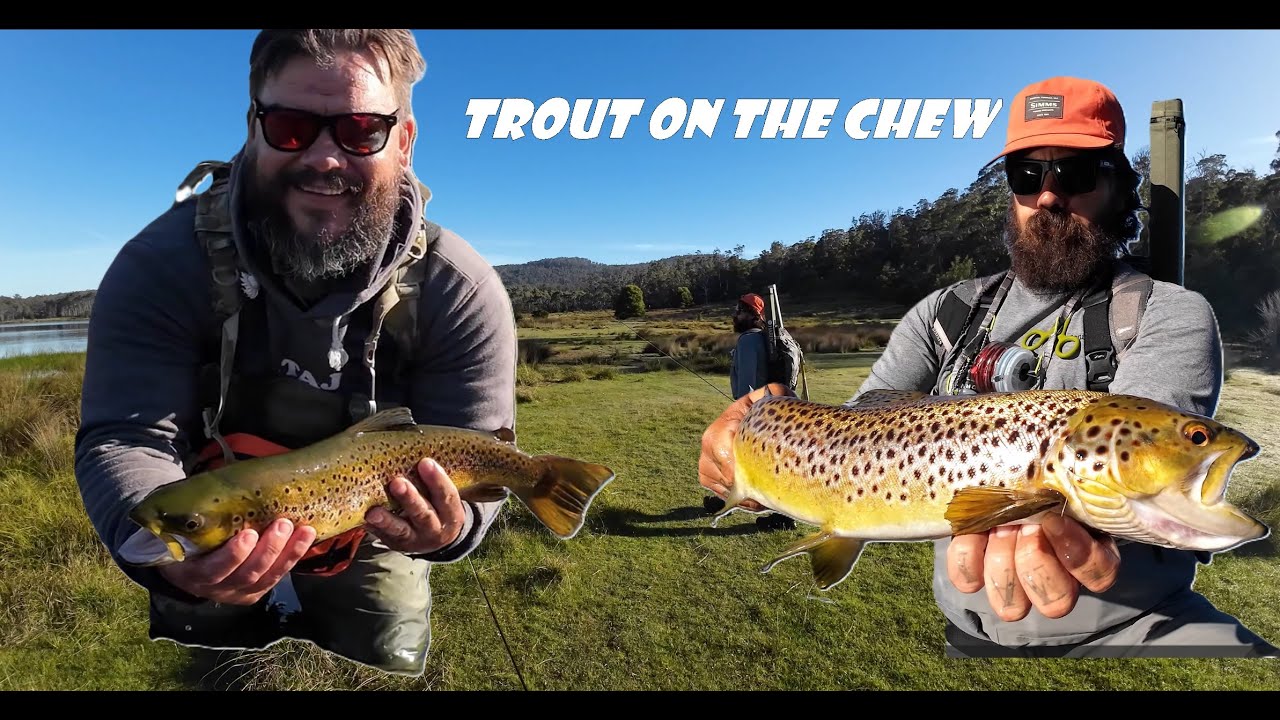
Wild Frontier Adventures' first video back from a long break is exactly the type of slow-burn Tasmanian highland fly session that keeps anglers booking flights to the island - sight-fishing big resident browns on a clear marsh edge, a frustrating refusal early, and a first-on-fly hook-up that left the angler retiring the fly entirely.
The morning opened with the crew watching bug life ride the surface and second-guessing pattern choices. Moth and mayfly patterns dominated the chat before a brown boiled past at the boat on a refusal, prompting a deadpan protest from the angler.
"You rejected me," he said as the fish drifted back into the reeds.
The eat came on the second pass. The angler had picked up the trout's lane by tracking water movement rather than the fish itself, and the cast dropped on the seam. "Hungry boy," he called as the rod buckled. The fight was harder than expected. Vicious head shakes pinned him in soft mud as he tried to walk the brown into the net.
His read on the area was that the trout were acting like commuters on a single seam.
"It's like a trout highway," he said, motioning down a clear lane between reeds. "Stand-up paddle board would be sick here."
The trout-highway read set up the fish of the day - a heavier brown that ate on a long drift, ran for weed and almost buried the rig before coming free. The angler palmed the reel through the run and pulled the fish into open water before letting it come up.
After releasing the fish in good condition, the angler turned to camera with the kind of line that sums up most first-brown-on-fly sessions in Tasmania.
"They fight way harder than I thought they would," he said. "That fly is retired."
The crew's reaction afterwards was to assume the area was 'shut down a little bit' and push deeper into the marshes for fresh water. Their workaround was to find small pockets out of the wind where the foam line stayed clean and wait for the next cruiser to push through. That patience produced more shots, including a slow tracking fish the angler tried to drop on without spooking.
On the gear front, the video doubled as a quiet wading lesson. The angler flagged a leak in his waders mid-fight and refused to back off. "Press on, bro. I don't want to lose this fish," he muttered, before later joking that thinner socks under heavy waders had left him 'like wearing gum boots without socks.'

For Australian fly fishers thinking about a late-autumn run into the Tasmanian highlands, the session reads as a small primer in the work that produces a fish: long, deliberate drifts, sight-fishing single cruisers, and patient resets after the area cools. For the angler holding the rod, it was a first brown on fly worth a retired pattern.