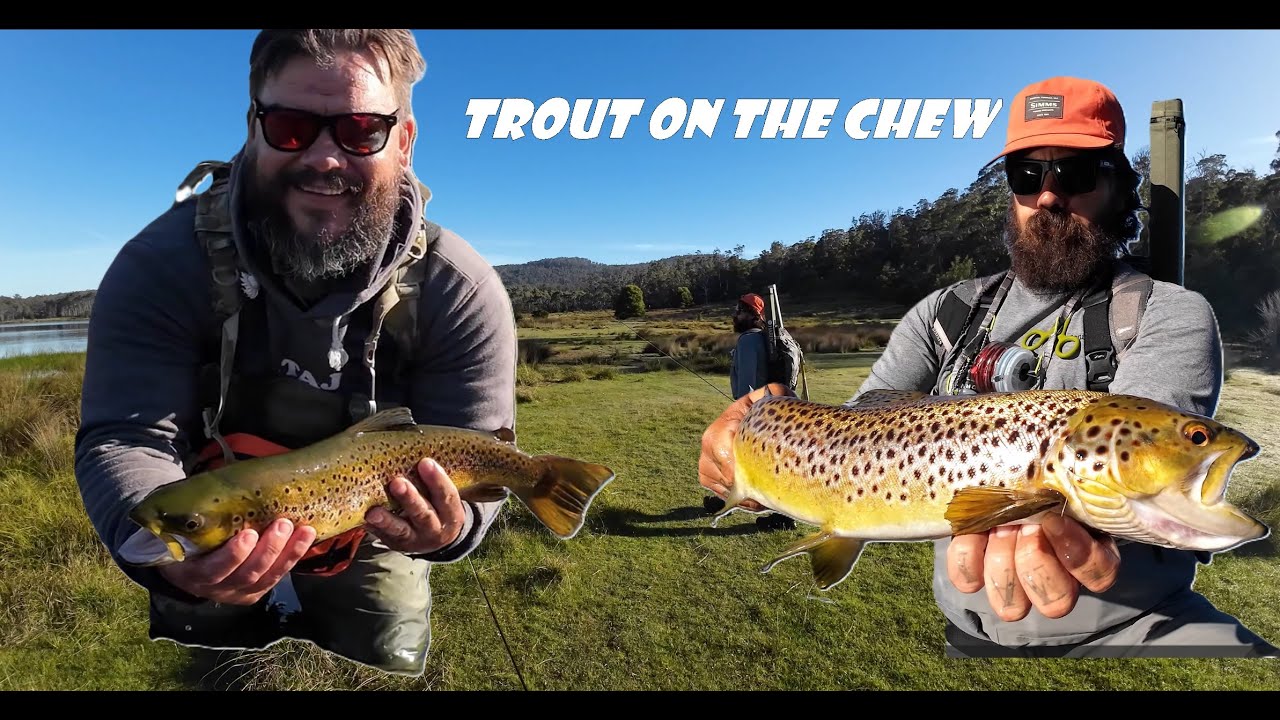
Wild Frontier Adventures' first video back from a long break is the kind of slow-burn highland session Tasmanian fly fishers still travel for - cruising big resident browns on a clear marsh edge, an early refusal that almost stalls the day, and a brutal first-on-fly hook-up that fights well above its size class.
The crew spent the first half of the morning dialled in on the bug life riding the surface. Mayfly and moth-like patterns were the talking points before a fish boiled past on a refusal close to the boat, prompting a tongue-in-cheek protest from the angler.
"You rejected me," he said as the fish disappeared back into a cove between two reed beds.
Patience paid the second time around. With the angler tracking water movement instead of the fish itself, the eat came perfectly on the seam. "Hungry boy," he called as the rod loaded. The fight that followed was harder than expected, with vicious head shakes pinning the angler in the soft mud as he tried to walk the fish into the net. "Vicious head shakes," his mate said, before the take of the day landed in the bag.
The angler's read on what made the difference was simple: in the marshes the trout act like commuters.
"I reckon a stand-up paddle board would be sick here," he said, looking down a clear lane. "Just float in nice. It's like a trout highway."
The crew used the highway analogy to set up the second fish - a heavier brown that ate on a long drift, ran straight for cover and almost buried the rig in weed before coming clean. The angler described palming the reel to slow him as the fish made his run.
"This is your rod, bro. Doesn't hurt on you," he laughed at his mate, mid-fight, before steering the fish out of the weed and onto the net.
What followed was the line of the day from a Tasmanian fly fisher who had just lifted his first brown on the long rod.
"They fight way harder than I thought they would," he said. "That fly is retired."
The fish was thick, in good condition and went back strong. The crew's read on the area afterwards was that the commotion had probably 'shut this area down for a little bit,' a useful reminder for Western Lakes-style sight fishers that the same patch will not always reload immediately. Their workaround was to push deeper into the marsh and hunt small pockets out of the wind, where multiple fish would push through if the foam line stayed clean.

On the gear side the video doubled as a wading lesson. The angler at one point flagged a leak in his waders and pushed on rather than miss the fish. "Press on, bro. I don't want to lose this fish," he said. He also confessed that thinner socks under heavier waders left him "like wearing gum boots without socks at the moment" - a small but important call for shoulder-season fishers heading into the highlands.
The session closed where it began, with the crew tracking another cruiser working its way through the highway and the angler trying not to crowd it before it took the fly. "Leave it. Leave it. Perfect," he muttered, dropping the cast in front of the fish as it kept tracking down the seam.
For the angler, it was a first brown on fly to add to the diary. For Wild Frontier Adventures, it was a return-to-camera session that captured everything Tasmanian highlands fly fishers love about late-autumn marsh work - long, deliberate drifts, sight-fishing on cruisers, and trout that punch well above their photographed size.