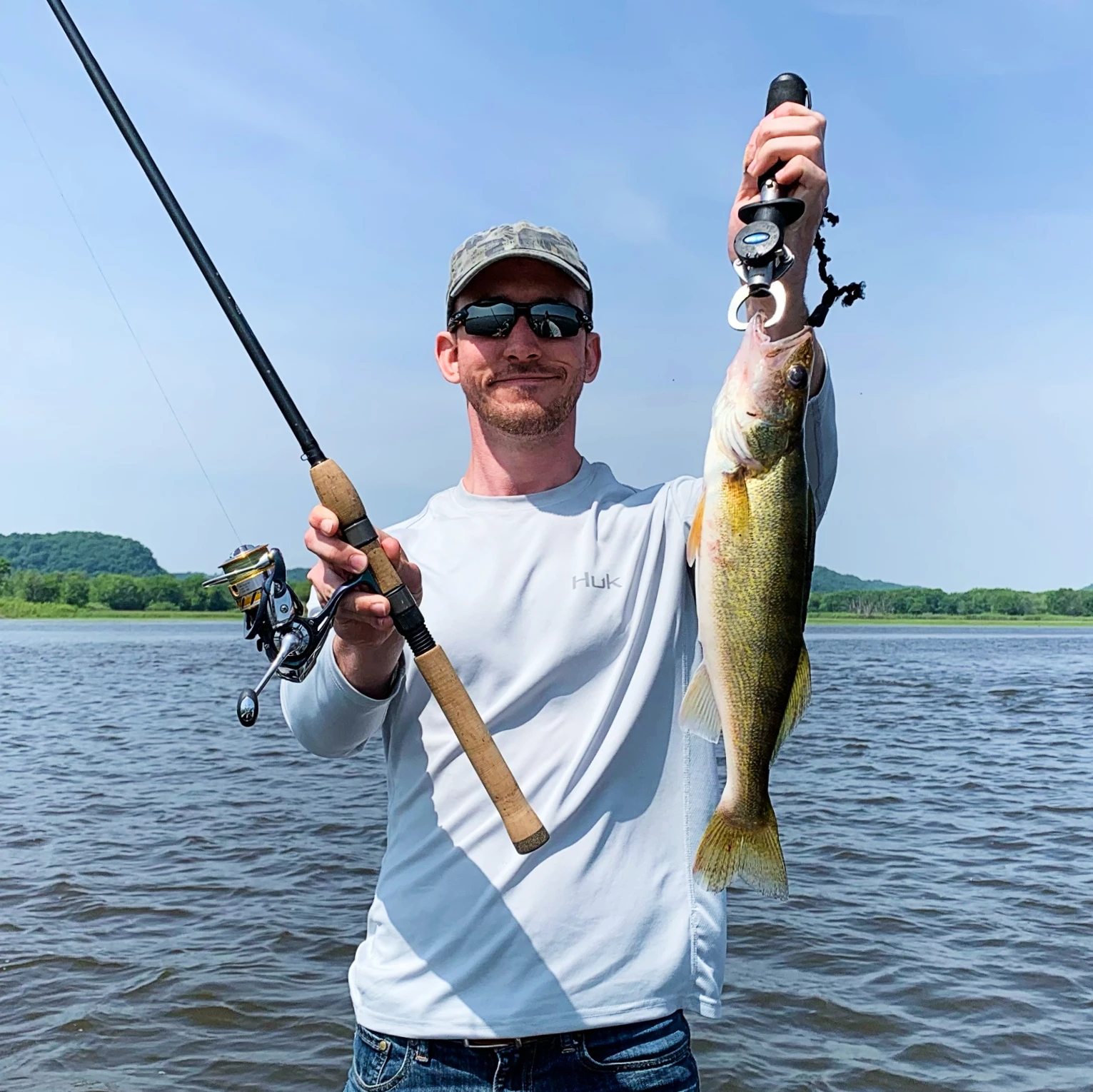
After more than twenty years of casting lines across Wisconsin's pristine waters, the Juran family has developed a reputation for consistently bringing home walleye. Now, through Juran Adventures, they're sharing the five techniques that have transformed their fishing success and hope to do the same for fellow anglers.
The family's expertise has been hard-earned through countless hours on notable Wisconsin fishing spots, where they've learned that successful walleye fishing isn't just about having the right equipment—it's about understanding how environmental factors dictate which techniques will be most effective.
"The effectiveness of these techniques varies based on factors like water clarity, depth, time of year, and weather conditions," said a representative from Juran Adventures. This adaptive approach has led them to identify five core techniques that have continually yielded successful results: jigging, slip bobbers, trolling, casting [soft plastics](/gear/soft-plastic), and [crankbaits](/gear/crankbait).

"The effectiveness of these techniques varies based on factors like water clarity, depth, time of year, and weather conditions,"

**Jigging: The Foundation Technique**
Among seasoned anglers, jigging stands out as one of the most versatile approaches to walleye fishing. The technique involves using a hook with a weighted head that can be paired with live bait such as nightcrawlers, leeches, or minnows, or artificial options like curly-tailed grubs.
The Juran family's approach to jigging involves fan casting over underwater structures in lakes and working with currents in rivers. Their preferred strategy focuses on drifting along depth changes between four and twelve feet. "The walleye like to stack up on these depth changes waiting for bait," they explained, emphasizing the importance of keeping the line vertical while gently bouncing the jig off the bottom to increase strike probability.
"The walleye like to stack up on these depth changes waiting for bait,"
For newcomers to jigging, proper bait rigging can make the difference between a successful day and going home empty-handed. "Many new anglers put a big ball of nightcrawler on a jig head and call it good. We've found that sliding the bait up the shank of the jig head and having a tail that can wiggle in the water will entice many more strikes," the family advised. They also stress keeping the hook barb exposed to improve catch rates—a detail that novice anglers often overlook.
**Slip Bobbers: Precision Depth Control**
For anglers seeking precise bait presentation, slip bobbers offer near-perfect depth control. This technique allows fishermen to present live bait at specific depths, with the Juran family recommending setting bait four to six inches above the bottom to entice hungry walleye while avoiding snags.
The beginner-friendly nature of slip bobber rigs has made them a go-to choice for the Juran family, particularly during their northern Wisconsin expeditions. Their experience on Butternut Lake exemplifies the technique's effectiveness: "We had multiple spots on Butternut Lake that were rock piles in 6 to 10 feet of water that seemed to hold walleye at all times."
**Trolling: Covering New Ground**
Trolling represents a more active approach to walleye fishing, involving moving lures or bait through the water to target walleye that roam in search of food. This technique proves particularly valuable when fish locations are unknown or when walleye are scattered across large areas.
"The key is to keep your bait at the right depth while consistently covering new water," emphasized an experienced angler from the family. This method serves a dual purpose: it helps locate where active fish are holding while simultaneously presenting bait to potentially hungry walleye.
"The key is to keep your bait at the right depth while consistently covering new water,"
**Soft Plastics and Crankbaits: Versatile Presentations**
Casting soft plastics provides another dynamic dimension to walleye fishing, with these lures capable of mimicking prey movements that can entice walleye even in challenging conditions like murky water. "The versatility of soft plastics allows for a wide range of presentations, and varying your retrieve speed can make all the difference," the Juran family explained.
"The versatility of soft plastics allows for a wide range of presentations, and varying your retrieve speed can make all the difference,"
Crankbaits round out their arsenal of preferred techniques, favored for their ability to mimic wounded fish—a presentation that often triggers aggressive strikes from walleye. Success with crankbaits requires strategic thinking, including selecting appropriate colors and sizes based on local forage fish.
**The Bigger Picture**
What sets the Juran family's approach apart isn't just their technical knowledge—it's their understanding that effective walleye fishing requires reading the environment and adapting accordingly. Water clarity, seasonal patterns, weather conditions, and depth all factor into their decision-making process when selecting which technique to employ.
This comprehensive approach has served them well across Wisconsin's diverse fishing environments, from the structured rock piles of Butternut Lake to the varied depths and currents they encounter throughout the state. Their willingness to share these insights reflects a broader fishing community tradition of passing knowledge from experienced anglers to those still learning the nuances of pursuing one of the Midwest's most prized game fish.