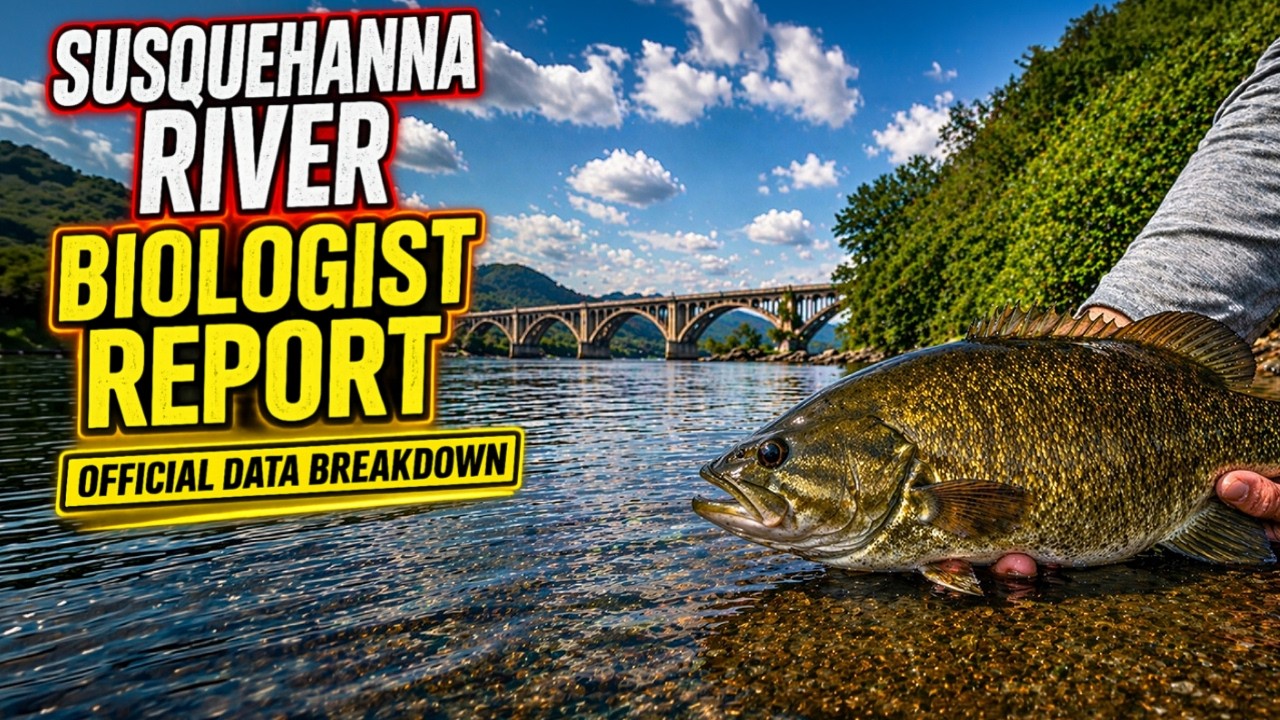
The Susquehanna River's smallmouth bass fishery has staged a remarkable comeback following years of disease-related mortality, according to Pennsylvania Fish & Boat Commission biologist Geoffrey Smith speaking on the Fishing the DMV podcast.
Smith, who has spent 18 years studying the river system, presented 2025 survey data showing adult bass abundance now consistently meets or exceeds long-term median values across the middle and lower Susquehanna, as well as the lower Juniata River.
The fishery suffered a prolonged crisis from roughly 2005 to 2012, when juvenile smallmouth experienced high summer mortality linked to largemouth bass virus combined with water quality stressors. The disease struck young-of-year fish each July and August, preventing recruitment whilst adult populations remained largely unaffected.
Strong year classes in 2012 and 2015 marked the turning point. Smith explained that once disease mortality waned, the river's productivity allowed populations to rebound quickly. The system's complexity—with numerous tributaries providing varied spawning windows from late March through early June—ensures consistent year-class survival even when individual areas experience setbacks.
The commission monitors five distinct reaches using standardised night-time boat electrofishing surveys. The middle Susquehanna, extending from York Haven Dam to Sunbury, represents the premier stretch most recognised by travelling anglers. This section features short pools, bedrock outcroppings and prime habitat characterised by complicated structure across the entire river width.
The lower Juniata exhibits similar characteristics and is managed alongside the middle Susquehanna under an adaptive management framework. Both systems have met population objectives for abundance, quality-sized fish and recruitment targets in recent years.
Current regulations in these reaches eliminate harvest and possession, preventing tournament weigh-ins. However, Smith indicated the commission may soon revisit these restrictions given the sustained population recovery. With five consecutive years of strong recruitment and survival, fisheries managers are considering whether different regulatory approaches might increase angler opportunity whilst maintaining healthy stocks.
The north branch and west branch Susquehanna remain under standard commonwealth regulations allowing limited harvest. The west branch presents unique conditions, its gin-clear water a legacy of acid mine drainage recovery. Though less productive than other reaches, remediation efforts over the past two decades have transformed it from a largely unfished system to one supporting regular angling activity.
Spawning typically commences when water temperatures reach 15 degrees Celsius, with larger fish nesting first followed by progressively smaller size classes. Some dominant fish spawn twice per season. This extended spawning period, combined with tributary dynamics, creates a buffer against catastrophic recruitment failure.
Smith noted that pre-spawn fishing from March through April offers excellent opportunities for targeting large fish as they move from winter holding areas to spawning sites at water temperatures in the high 40s Fahrenheit.
The recovery demonstrates how riverine smallmouth populations can rebound when disease pressure subsides and environmental conditions stabilise, offering a template for other systems currently experiencing similar challenges in the Chesapeake Bay drainage.