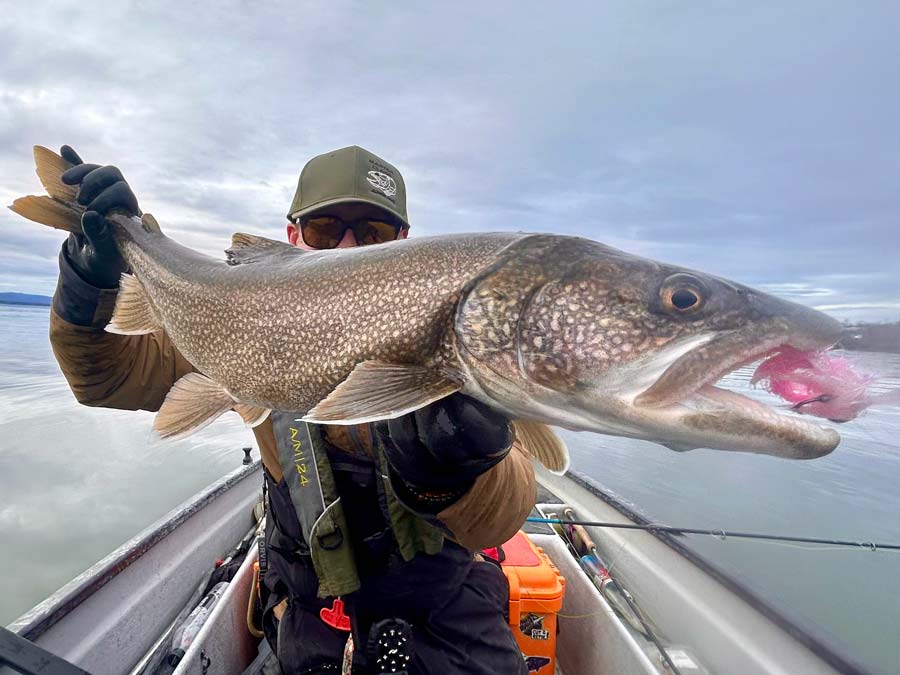
As temperatures rise in spring, lake trout begin moving into shallower waters, presenting an opportune time for anglers to target these predatory fish. Unlike later in the year when they descend to cooler depths, during the few weeks following ice-out, lake trout can often be found in waters just 10 to 15 feet deep. This provides excellent access for fly fishermen eager to take advantage of their spring feeding frenzy.
"The water is just starting to warm up, which really turns the fish on," said Drew Price, an angler who shares insights from his fishing experiences. The trout, having expended energy during the fall spawning period, are now focused on regaining weight. As they begin to chase bait, it’s not unusual to observe lake trout actively feeding near the surface in late winter or early spring.
"The water is just starting to warm up, which really turns the fish on,"

In Colorado's high-altitude lakes, anglers like Alex Deetjen have mastered the art of targeting lake trout shortly after ice-out. Deetjen recalled a spring outing while fishing for pike when he inadvertently hooked a sizable lake trout with a large articulated bucktail streamer. "I was astonished to find that it was a good lake trout," he said, emphasizing that many reservoirs in the area have successful lake trout stocking programs.
"I was astonished to find that it was a good lake trout,"

Through careful observation, Deetjen discovered the importance of targeting inflows, noting, "Suckers and rainbow trout were heading up the tributary to spawn, and the lake trout were there to take advantage of the situation." His go-to flies ranged from 8- to 10-inch Buford-style streamers, and he highlighted the necessity of using sinking lines to effectively reach the fish. He advises anglers to use a 9- or 10-weight rod paired with fluorocarbon leaders to ensure they can manage the larger flies in deeper water.
In upstate New York, Luke Bizzell employs a similar approach in the Finger Lakes, where lake trout have adapted to feast on non-native round gobies. Bizzell explained his methodology: "Dragging bottom is the name of the game. Cast as far as you can, let the fly get down, and keep a slow methodical retrieve." His equipment includes a Cortland shooting head and an 8-weight rod, coupled with a special streamer he created called the Goophead Goby.
"The Goophead Goby hugs the bottom and pushes a lot of water," noted Bizzell, reflecting on its design that incorporates rabbit strips and Goop glue for added movement. He insists that this slow and deliberate retrieval is key to enticing strikes, especially as the fish linger in shallow waters until they start retreating deeper in mid-May.
"The Goophead Goby hugs the bottom and pushes a lot of water,"
George Rogers offers another perspective, fishing for lake trout in the Adirondacks. He primarily targets the native rainbow smelt, another staple in lake trout diets. "Almost anything smelty will get the job done," Rogers remarked, indicating the effectiveness of familiar bait mimicking. Whether casting from a canoe or trolling the waters, he favors a 6- or 7-weight rod with an intermediate line to effectively showcase his 3- to 4-inch Gummy Minnows.
"Almost anything smelty will get the job done,"
Rogers emphasizes the importance of slow retrieves near natural structures, sharing, "they are essentially a swimming stomach with a mouth," to underline the voracious appetites of these fish. Their presence in these lightly pressured waters lasts until temperatures rise above the 50-degree mark, after which they tend to descend once again.
"they are essentially a swimming stomach with a mouth,"
Career Journey
As spring unfolds, anglers eager for a lake trout catch should consider utilizing the insights shared by these experts. With the right approach, tackle selection, and understanding of fish behavior, they can enhance their fishing outings in shallow waters. The window for targeting these active fish is relatively short, making the early part of the season a vibrant time for anglers, before the heat drives them deeper.
In conclusion, while the techniques for successfully catching lake trout vary by region, the core principles remain consistent: understanding their feeding behavior, using the right tackle, and employing effective retrieval methods can significantly improve catch rates during this ideal spring fishing period.