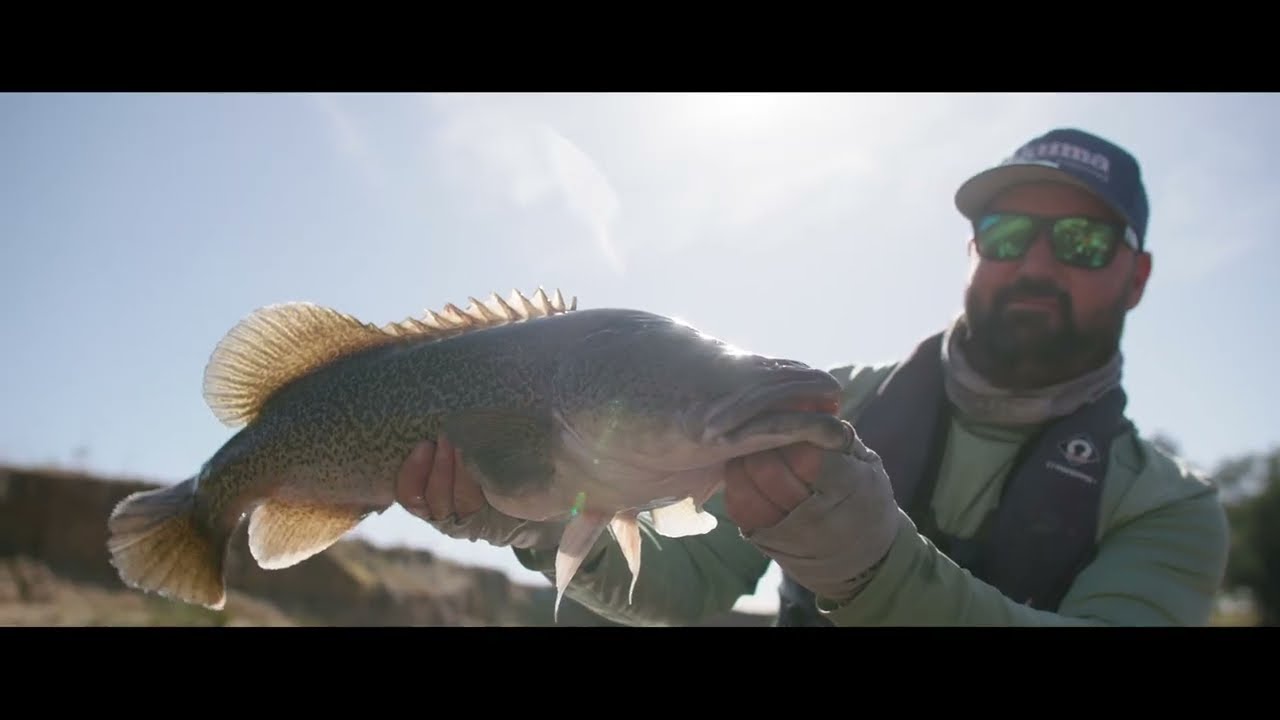
NSW Fisheries has detailed the next phase of its Trout Cod Action Plan in a new field report from the Murrumbidgee, where hatchery staff and contracted anglers spent three days drift-fishing remote reaches of the river to collect broodstock for the state's captive-breeding programme.
The story behind the work is one of Australia's quietest conservation comebacks. Trout cod, also known as bluenose or eastern freshwater cod, were not formally recognised as their own species until 1974. Within a decade they were almost gone.
"There was one wild population remaining, and that was in the Murray River below Yarrawonga Weir and about 100 km upstream. They were locally extinct from everywhere else where they historically occurred. So, we almost lost them," the lead biologist on the programme said.
The department has been rebuilding numbers ever since, but the bottleneck has always been broodstock genetics. To widen the gene pool, the team is now using drift boats to access stretches of the Murrumbidgee that electric-fishing boats can't reach. Anglers run lures along snags and over hidden gravel beds, with every captured fish swabbed, photographed and trucked back to the Narrandera hatchery.
The results from the latest trip were lopsided. "We caught 14 trout cod for the three days, and we caught two Murray cod, and like four golden perch," the biologist said. That ratio surprised the crew given trout cod are still considered the rarer fish on paper. The explanation, he said, is that trout cod are simply more aggressive, which makes them easier to catch and gives anglers a misleading impression of how abundant they are.
The programme also has new production targets. "Our short-term production numbers, target is 100,000 a year, and then we want to ramp that up to 250,000 a year within the next five years," the lead biologist said. To get there, the hatchery has switched from hormone induction and hand-stripping to a passive nest-box technique, with broodstock ponds doing the work themselves. "It's a great outcome for the fish, but also it will increase our production as well."
For the recreational angling community, the appeal of trout cod is starting to register. One of the contracted anglers, a long-time cod fisher, said the species is closer to a Murray cod than most realise. "To have a fish that will eat a top water lure like a Murray cod does, they eat flies, they fight harder than a Murray cod, and while they may not grow as big, they do all the same things and they've got more punch," he said.
Day-by-day the bite was the usual cod-fishing grind. Day one produced five fish across the boat. Day two opened slow and finished with around ten in the bag, the biggest a low 60s caught on a topwater right at last light. Day three rolled the trifecta - trout cod, Murray cod and golden perch - in a 200-metre stretch near the boat ramp.
The long-term goal, the team said, is bigger than just keeping the species alive. "Our long-term objectives and goals are to reestablish and rebuild populations to the point where they can sustain recreational fisheries and be once again targeted by recreational fishers."
For anglers who grew up on the Murray-Darling never knowing trout cod existed in their home water, the message from the agency is unambiguous: "Why don't we want it back in our river? We want them back where they used to be, so we can go and catch them."