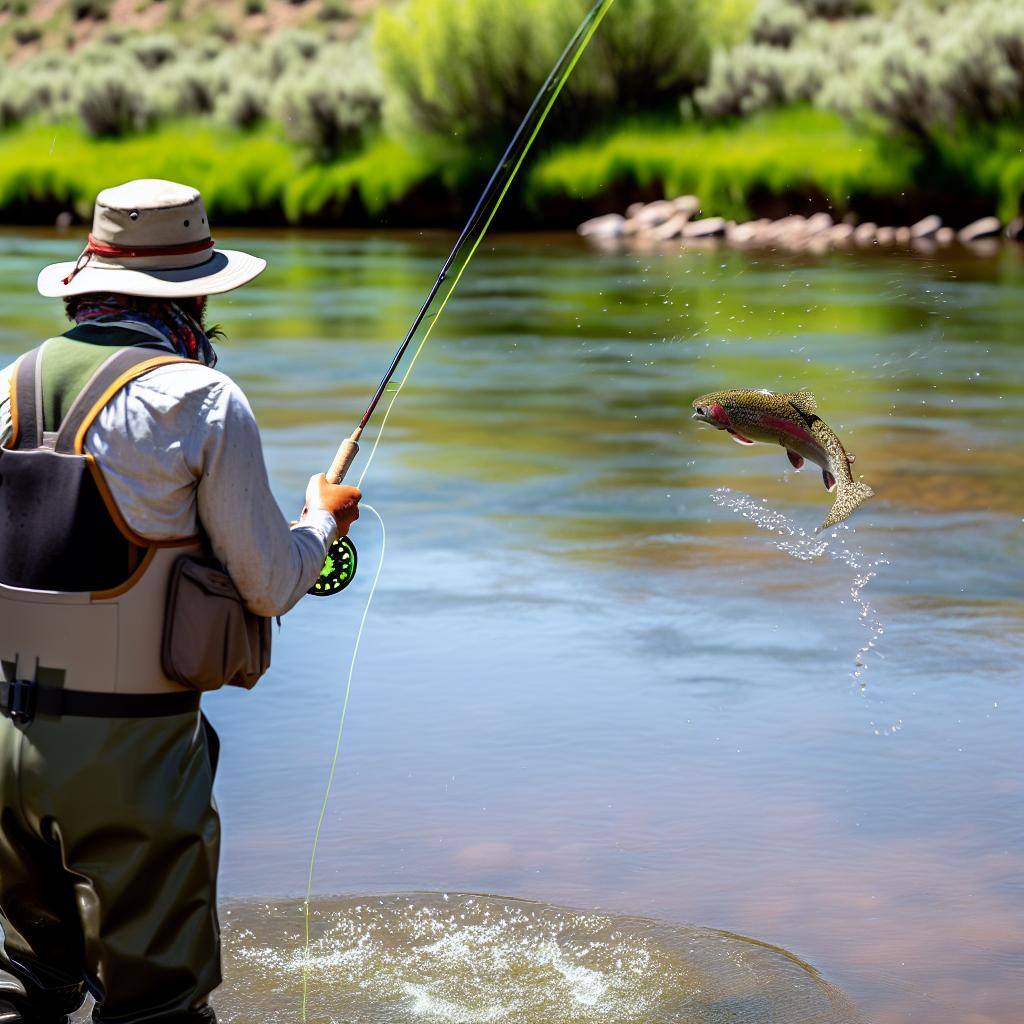
Brown trout, a favorite among anglers nationwide, offer both challenge and thrill. Whether you're fishing in streams, rivers, or lakes, mastering the art of catching these elusive fish is a worthy pursuit.
"Catching a big brown is the pinnacle for many trout anglers, whether fishing with fly gear or conventional tackle," said Max Inchausti, a seasoned fisheries biologist. The wide availability of brown trout, coupled with their aggressive nature, makes them a top choice for freshwater fishing enthusiasts.
"Catching a big brown is the pinnacle for many trout anglers, whether fishing with fly gear or conventional tackle,"


Career Journey
Inchausti shared his journey of fascination with the species, revealing, "I became obsessed with brown trout a long time ago. After learning how to catch a bunch at my local stream, I only wanted to catch big browns, then only wild browns, and then I got into lake-run browns." His experiences underscore the various stages of angling dedication that many share while pursuing these iconic fish.
Brown trout, scientifically known as Salmo trutta, are part of the salmonid family and are well-known for their striking appearance. Their deep, golden hues, accentuated by a pattern of spots, captivate anglers of all levels. "Their aggressive and territorial behavior makes brown trout so appealing," Inchausti explained.
"Their aggressive and territorial behavior makes brown trout so appealing,"

Identifying whether you're dealing with a wild or stocked brown trout is a challenge for many. Wild browns boast vibrant colors with distinct spot patterns that are well-spaced, while stocked varieties may exhibit spots that bleed together. Moreover, wild fish often have uniquely shaped fins and a small halo-shaped blue dot behind the eye, critical features that seasoned anglers learn to recognize.
The history of brown trout in North America is quite fascinating. Originally from Europe and parts of Asia, these fish were introduced to the U.S. in the 1860s when enthusiasts transported brown trout eggs from Germany to New York. According to Inchausti, "Since then, the expansion has been rapid, with brown trout populations exploding across the states."
Brown trout are particularly hardy compared to other trout species, capable of thriving in warmer waters—up to 75 degrees Fahrenheit. This adaptability has contributed to their success in various habitats, particularly in regions where other trout species struggle. In southern states, for instance, brown trout have become the preferred species for stocking due to their resilience.
However, targeting bigger brown trout requires savvy techniques and equipment. Inchausti emphasizes that the wise angler must be patient. "When brown trout grow big, they become extremely smart and wary. Fooling these fish requires a lot of patience and the right gear." His advice is invaluable for both novice and experienced anglers alike.
When it comes to fishing tactics, each environment offers distinct approaches. In rivers and streams, anglers can expect challenges that require skillful maneuvers. "Whether fly fishing or using conventional tackle," Inchausti shared, "river browns present abundant opportunities, fight hard, and grow to impressive sizes."
"Whether fly fishing or using conventional tackle,"
Career Journey
Career Journey
Career Journey
In their natural habitats, brown trout often hide in structure and cover, making stealth crucial for successful fishing. Techniques vary from using small, natural baits to imitating their native food sources like minnows and insects. Anglers should consider timing their outings early in the morning or late in the evening when browns are most active.
In stillwater environments, the strategies shift slightly. Inchausti notes, "Targeting lake-run browns is different from stream fishing. Here, focus on deeper waters and pay attention to seasonal patterns as these fish migrate." Understanding their habits and movements will significantly increase your success rate.
As the pursuit for that trophy brown trout continues, anglers can find joy in the process. Inchausti encapsulated this sentiment beautifully: "I eventually ended up right where I began—loving to catch any brown trout willing to take my fly." The thrill of fishing transcends personal milestones; it’s about the joy of being on the water and embracing the challenges presented by these incredible fish.
In summary, whether you're looking to hone your skills in a local stream or explore deeper lakes in search of larger specimens, understanding brown trout biology and behavior is vital. Their adaptability, striking appearance, and tenacity make them a fascinating species to pursue. With the right knowledge and patience, landing that prized brown trout can turn into a remarkable fishing experience.