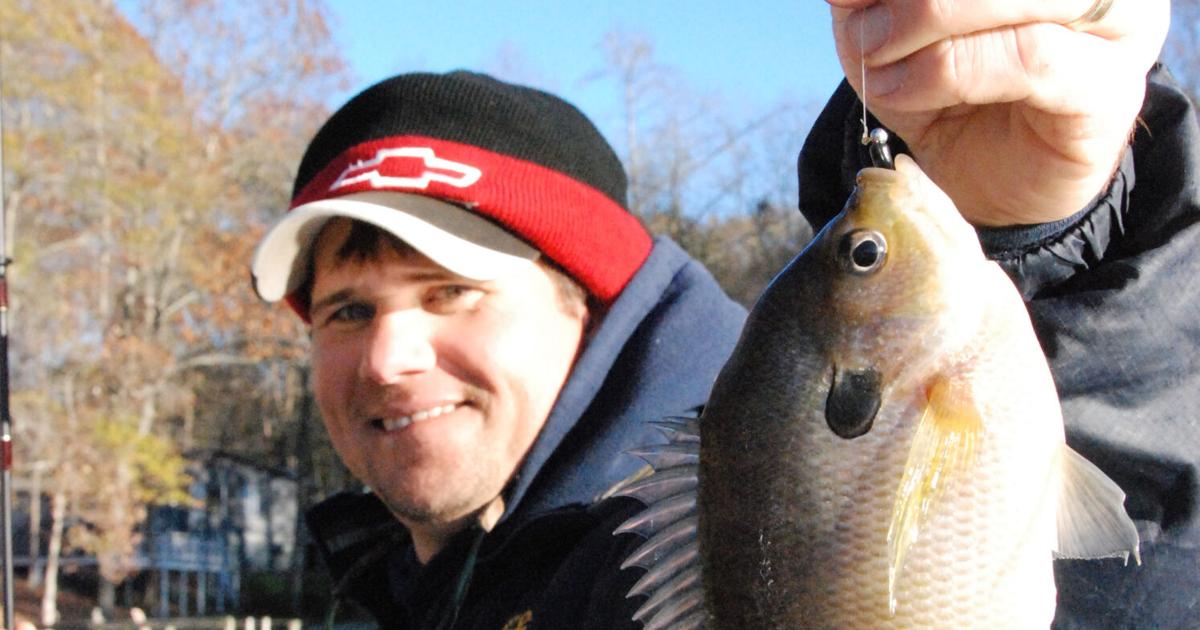
When imagining a day of bream fishing, most enthusiasts picture leisurely afternoons spent on docks, waiting patiently for bites on crickets or worms. Yet as winter transforms into spring, some anglers may overlook the prime opportunities for catching these panfish during late winter. According to veteran fishing guide Brad Taylor, this time of year can yield some of the best bream action.
"Late February and early March can be a great time to catch some of the biggest bream of the season," said Taylor. While bluegills are a common mainstay in many upstate lakes, Taylor is particularly fond of pursuing shellcrackers, or redear sunfish, which are also plentiful. He notes that both species often congregate in similar areas during the late winter months.
"Late February and early March can be a great time to catch some of the biggest bream of the season,"

"Now is probably my favorite time of the year to go after shellcrackers," Taylor emphasized. "Shellcrackers are a fairly cold-water fish. The last of February through March, they are still on somewhat of a winter pattern." This seasonal transition presents an opportunity for anglers to find females filled with eggs before the spawning period begins.
"Now is probably my favorite time of the year to go after shellcrackers,"

To maximize success, Taylor recommends targeting specific locations. He describes the "dead bays," which are coves without flowing water that can attract pre-spawn bream. "If you can catch a string of warm days, these fish will move into the backs of those dead bays or up on top of a long point," he explained.
"dead bays,"

In shallow waters, Taylor has seen them congregate as close as 2 to 4 feet deep, where the sun can warm the water several degrees. However, he notes that the average depth for successful fishing tends to be around 10 to 12 feet this time of year.
Championship Implications
Championship Implications
Championship Implications
As low water levels become common prior to spring rains, anglers can observe the bottom characteristics along shorelines extending into the water. "Short, rocky points and shoals are good spots to try as the fish move up and back on a daily basis," Taylor stated.
"Short, rocky points and shoals are good spots to try as the fish move up and back on a daily basis,"
Championship Implications
Championship Implications
Moreover, any structure like stumps, weeds, rocks, or brush will help heat up these points, making them attractive spots for bream. Taylor's preferred method for catching shellcrackers involves anchoring the boat to maintain steady lines as he casts out in various directions.
Equipped with simple tackle, he often uses a No. 2 hook on monofilament line along with split shot for weight. Despite the added diameter, he prefers using 6-8 pound line, confident that it won't scare the bream away and provides resistance against potential larger catches like channel catfish or largemouth bass.
Championship Implications
"Since I'm fishing on rocky points, I like to slide a 1/8 oz bullet weight ahead of the split shot," he said, noting the weight helps minimize snags on the bottom.
"Since I'm fishing on rocky points, I like to slide a 1/8 oz bullet weight ahead of the split shot,"
While the action of late winter fishing may not mirror the excitement of summer, Taylor approaches each spot strategically. "I give a spot 20-30 minutes and make sure I’ve got a line in every fishy looking location I can reach before moving to the next spot," he explained. It’s indeed a more laid-back experience compared to warmer months.
"I give a spot 20-30 minutes and make sure I’ve got a line in every fishy looking location I can reach before moving to the next spot,"
Taylor advises anglers to take their time in the morning hours. "The best part is you don’t have to be on the water at daylight. Sleep in, let that sun get up and start warming those areas. I catch more bream from 10 a.m. to 4 p.m. than either first or last light," he shares.
As bream fishing transitions with the seasons, there are plenty of opportunities to catch not only shellcrackers but also bluegills in upstate lakes. With the right techniques and patience, anglers are encouraged to enjoy this often-underappreciated late winter fishing experience.