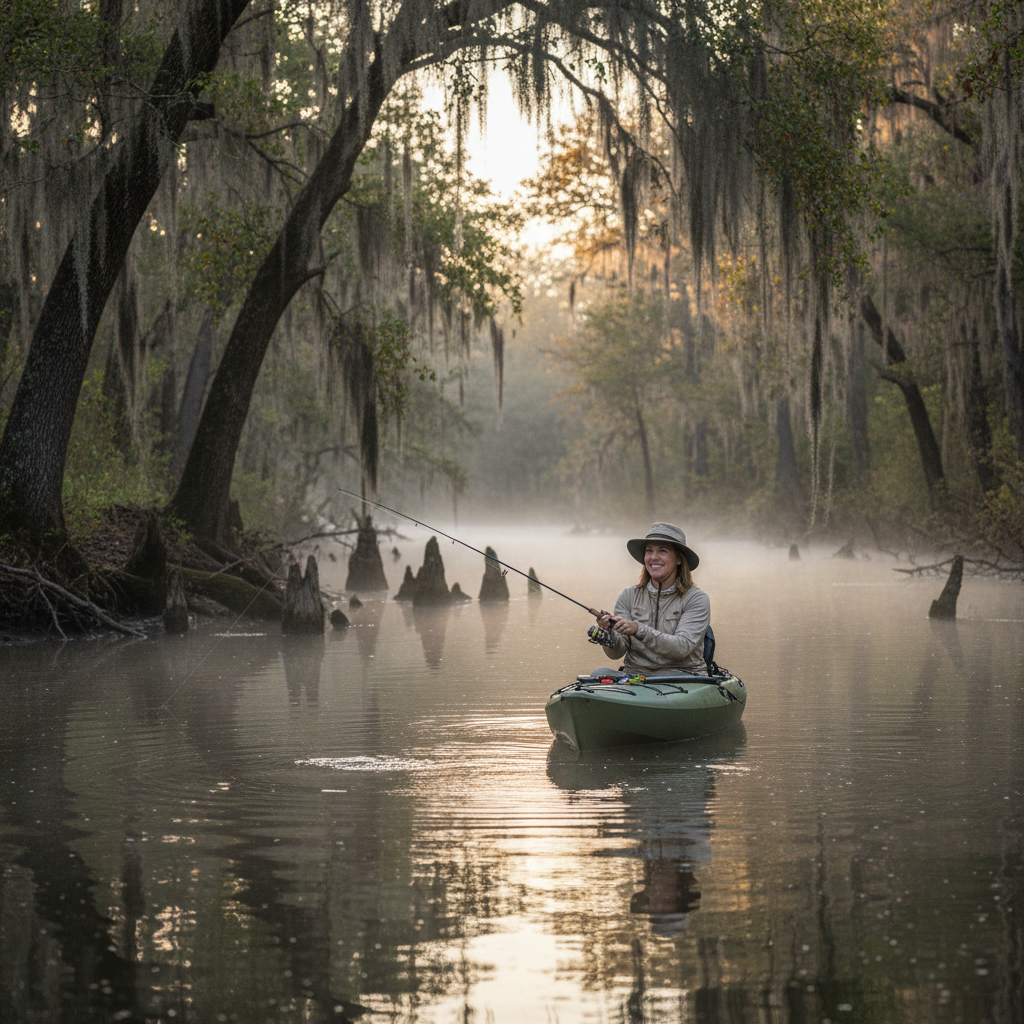
As the sun rises over East River Creek, anglers are greeted with cold air and calm waters, making it the perfect setting for a fruitful day of crappie fishing. With some knowledge and timing, your chances of landing a delicious crappie dinner could very well come from just one cast.
"When water hits 58 °F, crappie move into 3-foot shallows around tree limbs," said a local fishing enthusiast. This marks the beginning of the spring season, when crappie abandon the deeper waters for shallower areas teeming with opportunities around cypress knees and downed branches. A [kayak](/gear/fishing-kayak), especially one that's easy to maneuver like a 10- to 12-foot sit-on-top model, can navigate these tight spaces efficiently. Using natural shad-gray or smoke tube jigs can be effective in the clear water, and after a rain, it's advisable to switch to chartreuse-white jigs for better visibility. "Pausing for about five seconds between lifts keeps the jig in the strike zone while avoiding snags," the enthusiast added.
"When water hits 58 °F, crappie move into 3-foot shallows around tree limbs,"


As the warm summer months approach, water temperatures rise above 75 °F, causing crappie to seek refuge in deeper waters. "Late-morning sunshine pushes slabs to the first sharp bend where 12- to 18-foot holes meet submerged timber," noted a local fishing guide. To locate these hidden spots, portable clamp-on sonars or castable transducers can be invaluable. According to one expert, "Look for returns shaped like Christmas trees—the dense base marks the trunk while the dotted scatter above reveals suspended fish."
"Late-morning sunshine pushes slabs to the first sharp bend where 12- to 18-foot holes meet submerged timber,"
Career Journey
Career Journey

Career Journey
Planning your fishing trips during the early hours proves beneficial, especially when launching from the East Bay ramps. This timing not only maximizes fishing opportunities but also allows anglers to avoid heavy afternoon winds that make the return journey arduous. Keeping track of several high-confidence brush piles, as one angler suggested, allows you to cycle efficiently through your favorite spots, ensuring that you make the most out of limited fishing time.
With autumn in the air, cooler north breezes cause the water temperature to dip below 70 °F. Anglers may observe a shoreline migration, with fish remaining tightly bound to structures until a significant cold front arrives. Utilizing the same sonar technology from summer can help locate fresh brush that has sunk over the warmer months. "In lightly stained water, a smoke-glitter jig reflects the angled autumn sun and draws strikes during long pauses," recommended an experienced angler. Should rain impair visibility, switching to a pink-chartreuse body can attract fish even in challenging conditions.
"In lightly stained water, a smoke-glitter jig reflects the angled autumn sun and draws strikes during long pauses,"
Qualifying
Qualifying
Winter brings its own challenges, as cold snaps push crappie into deeper brush. Anglers are advised to drop either a still minnow or a tiny hair jig from the piers at Holley Point or Russell Harber. "Dawn or dusk are the best times to catch that elusive slab," suggested a local fishing expert. Winter conditions, however, can make for some entertaining moments for families. The Holley Point pier is equipped with seating and railings, while the low bank at Russell Harber allows wading with a 10-foot pole, creating a family-friendly atmosphere for fishing.
"Dawn or dusk are the best times to catch that elusive slab,"
Whether driving a quick fishing trip between beach outings or planning an afternoon with the kids, knowing where to fish and how to prepare gear can significantly improve your experience. "A slip-float rig to dodge snags works wonders, especially for keeping minnows above the cover," said one seasoned fisherman. Moreover, anglers can effectively clean their catch right at the campground sink, furthering the experience of a successful fishing day.
"A slip-float rig to dodge snags works wonders, especially for keeping minnows above the cover,"
Career Journey
Casting your line for crappie at East River Creek not only provides a chance to catch a delicious fish but also serves as an engaging outdoor experience. With the changing seasons dictating fish behavior and location, understanding these dynamics will enhance every angler's visit to this beloved fishing spot. From a peaceful early morning on the water to cooking up a fresh catch at camp, the joy of crappie fishing here is unmistakable. As you gear up for your next adventure, remember: whether it’s the spring spawn or winter's chill, the key to a successful day lies in knowing where to go and how to adapt your techniques.